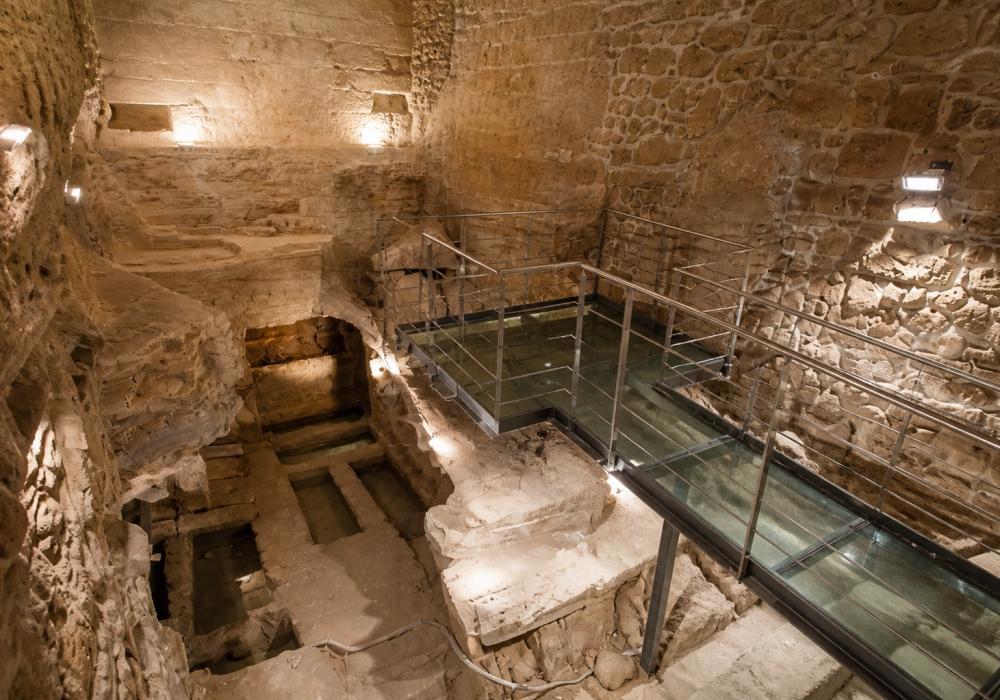
The Funerary Hypogeum of Palazzo delli Ponti, in Taranto, is an underground environment of archaeological interest integrated into the structures of a historic building. It is a hypogeum tomb, dug into the rocky bank, originally intended for burial and the celebration of funeral rituals....Read more
The Funerary Hypogeum of Palazzo delli Ponti, in Taranto, is an underground environment of archaeological interest integrated into the structures of a historic building. It is a hypogeum tomb, dug into the rocky bank, originally intended for burial and the celebration of funeral rituals. Its function was both practical and symbolic: to receive the deceased, preserve their memory, and testify to the social status of the family or group to which they belonged. The site is part of the rich funerary heritage of ancient Taras, the Spartan colony founded in the 8th century B.C., one of the most important centers of Magna Graecia. The Taranto hypogea, often hidden under palaces and courtyards of the modern city, tell the story of the continuity of life in the territory and the overlapping of different eras: from the Greek and Hellenistic world to subsequent urban transformations. Elements such as excavated chambers, entrances, niches, or burial levels help understand funeral practices, ancestor worship, and the ancient Tarantini's relationship with death and the afterlife. From a tourist perspective, the hypogeum represents an evocative stop for those who wish to discover the underground and lesser-known Taranto. The visit allows connecting urban archaeology to the path of the National Archaeological Museum of Taranto and other hypogea in the historic center. Access may be subject to limitations, extraordinary openings, or guided tours: it is advisable to inquire in advance at local tourist offices or organizations that promote the archaeological heritage.
Read less