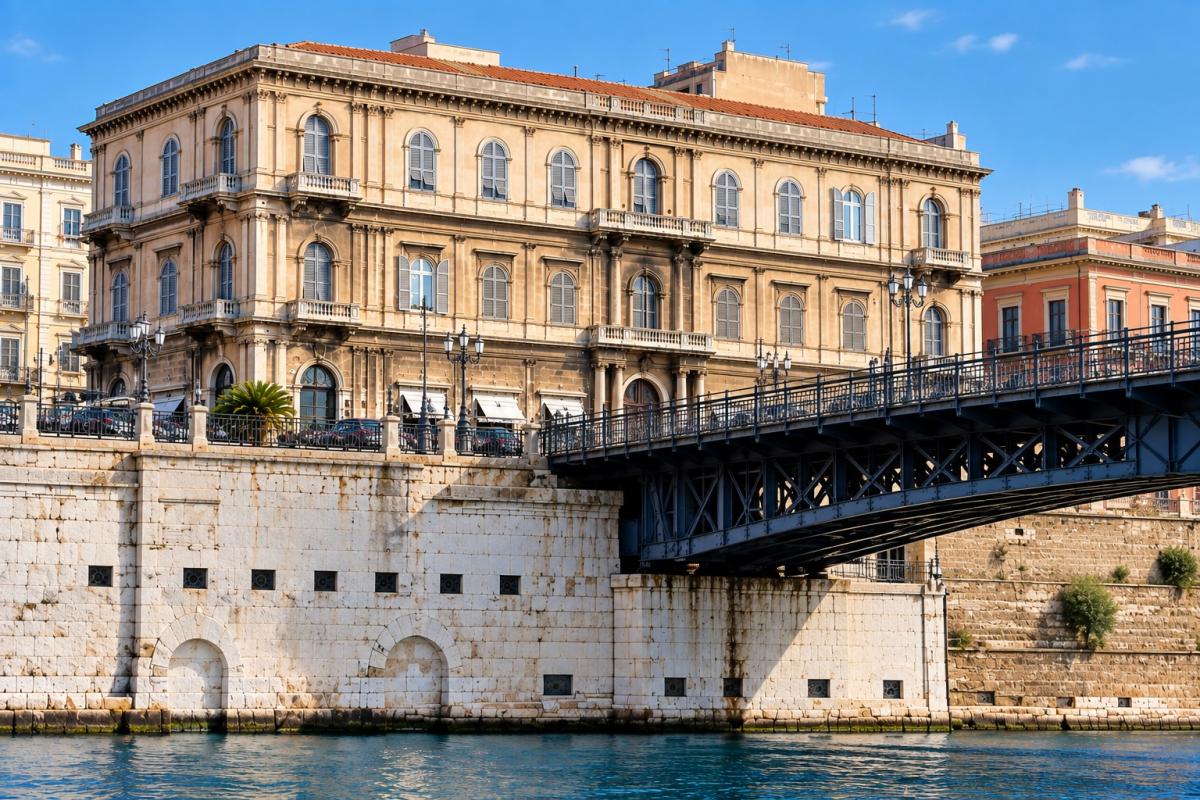
Palazzo Ameglio, also known as Palazzo Savino Ameglio or Palazzo Ameglio formerly Savino, stands at 33 Corso ai Due Mari, in the heart of the Borgo Umbertino, in one of the most scenic locations in Taranto, overlooking the Navigable Canal and the Swing Bridge, between the Old City and the modern city. Built starting from 1869, it is considered one of the first and most significant palaces that arose in the new urban expansion of Taranto beyond the ancient core of the Old City.
...Read morePalazzo Ameglio, also known as Palazzo Savino Ameglio or Palazzo Ameglio formerly Savino, stands at 33 Corso ai Due Mari, in the heart of the Borgo Umbertino, in one of the most scenic locations in Taranto, overlooking the Navigable Canal and the Swing Bridge, between the Old City and the modern city. Built starting from 1869, it is considered one of the first and most significant palaces that arose in the new urban expansion of Taranto beyond the ancient core of the Old City.
The construction of the building, initiated in 1869, is part of the urban expansion process that, after the Unification of Italy, led Taranto to develop beyond the ancient core of the Old City. Originally named Palazzo Savino, the building became one of the first and most important noble palaces of the new bourgeois city, taking on a particularly significant position along the Navigable Canal.
The palace features an imposing architecture of a noble and eclectic character, in which elements of the local architectural tradition are combined with a classicist language typical of monumental construction between the second half of the 19th century and the first decades of the 20th century. The facades, predominantly made of local stone, are punctuated by pilasters, cornices, capitals, balconies with balustrades, and large arched windows, creating a monumental facade tightly integrated into the urban landscape of the Borgo Umbertino.
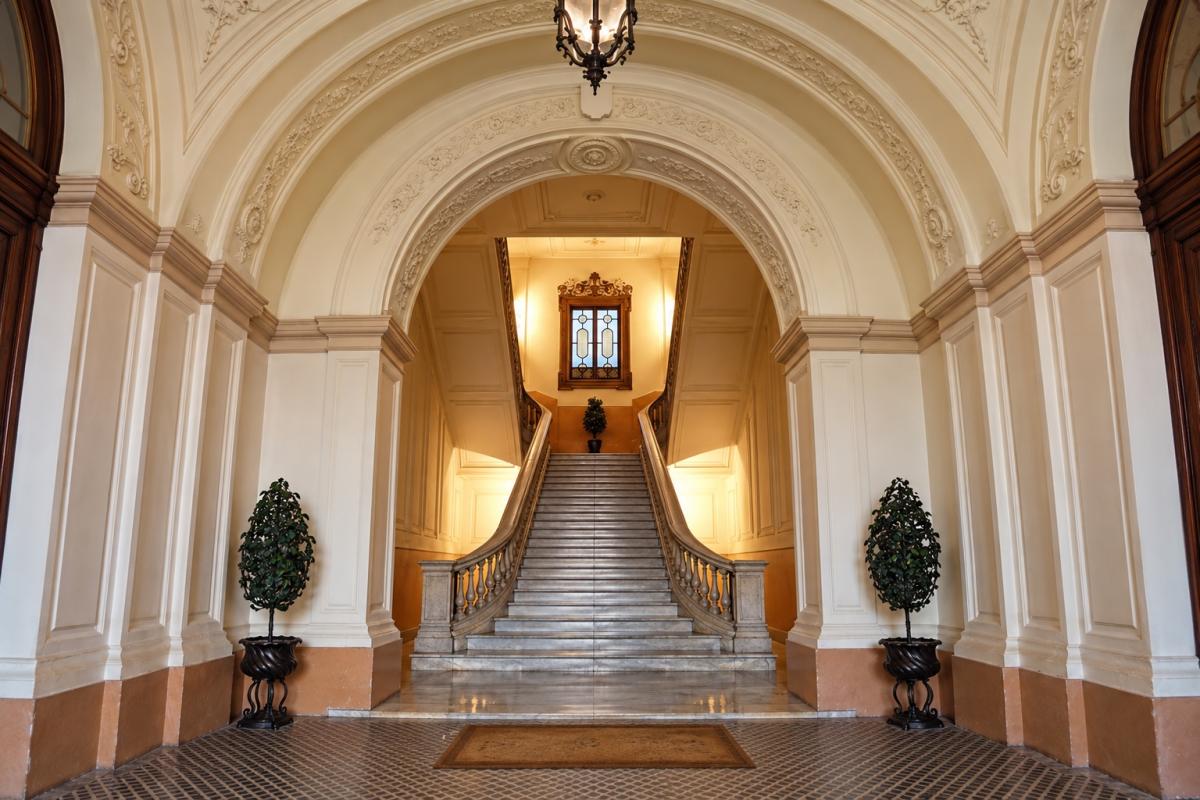
Among the most significant architectural elements are the monumental entrance portal with paired Doric columns, the vaulted entrance hall, and the dramatic vice staircase. The main floor rooms include reception spaces and a library.
The history of the palace is first linked to the Savino family and later to the Ameglio family, whose intervention led to the completion of the building in its current configuration. In the 20th century, the palace was also involved in the events of the Second World War when it was occupied by the British Command.
Today, Palazzo Ameglio primarily serves institutional and cultural purposes. It is the seat of the Delegation of Terra d’Otranto of the Sovereign Military Order of Malta and the Center for Melitense Studies, dedicated to the study of the history of the Order of St. John of Jerusalem, Rhodes, and Malta. The Center includes a specialized library and promotes activities of study, research, publication, and dissemination.
Due to its location, architectural value, and historical events, Palazzo Ameglio is one of the most representative buildings of Taranto's transition from the historic insular city to the modern 19th-century city and an important element of the historical and cultural heritage of the Borgo Umbertino.
Read less